
Disc Herniation Treatment in New Jersey
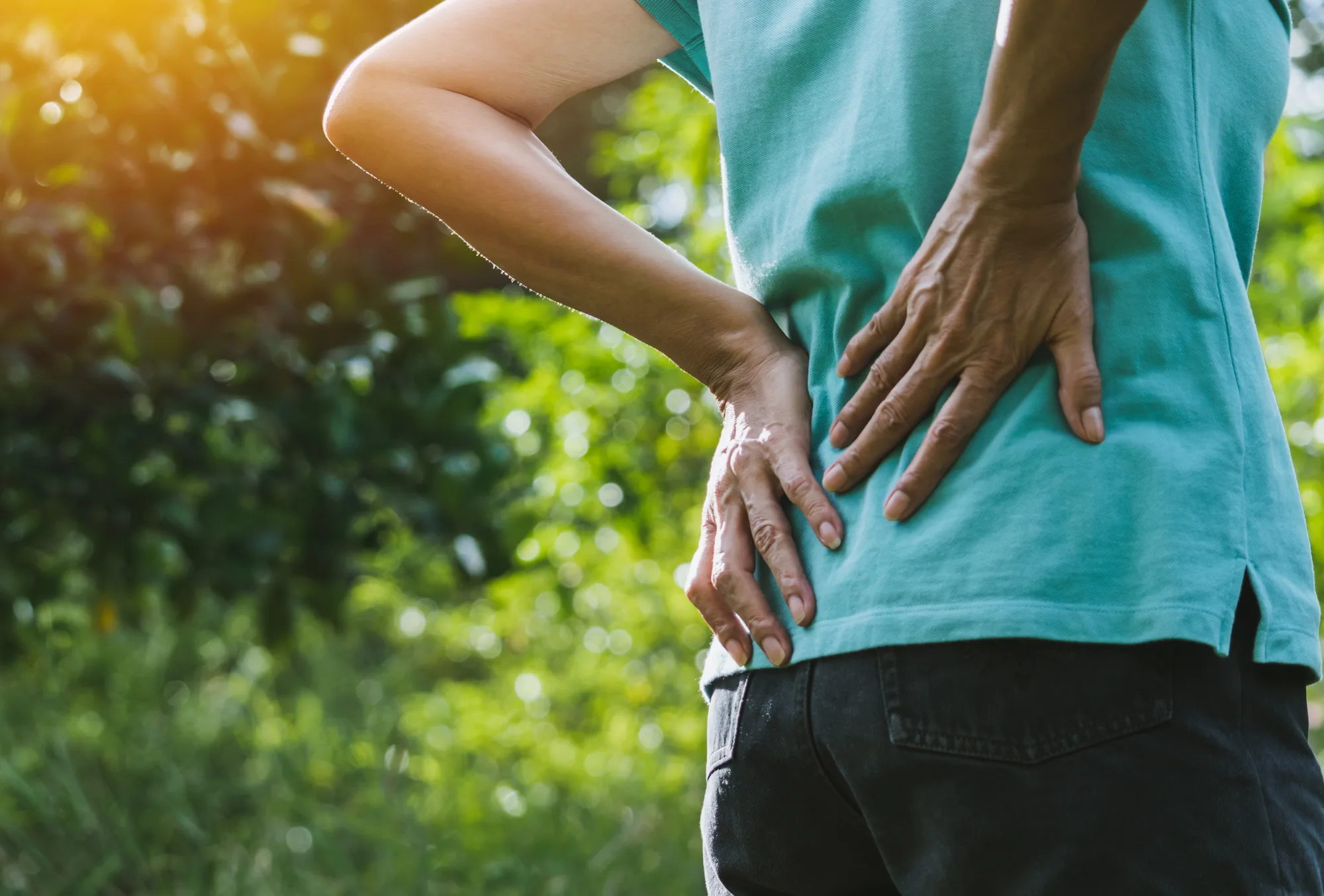
A disc herniation occurs when the outer lining tears, and the inner substance squeezes out, pushing on the nerves that run down the spine. This causes neck, back, arm, or leg pain, numbness, and/or tingling.

Definition
What is a Disc Herniation?
Spinal discs sit between each vertebrae cushioning your spine and allowing it to flex. When a disc herniates, the soft jelly like center pushes through a weak or torn outer area in the tougher exterior, possibly causing inflammation or irritation to surrounding nerves. Some disc herniations can be painless while others can cause significant discomfort and disability affecting your work and daily activities.
At The Jey Institute, we help spine patients throughout New Jersey understand the cause of their symptoms and determine the most appropriate treatment. Symptoms vary based on the location but may include:
- Sharp arm or leg pain
- Numbness or tingling
- Muscle weakness
- Neck or back pain
- Pain when sitting or bending
- Sciatica symptoms
- Burning nerve pain
- Loss of balance/coordination
- Pain when coughing or sneezing
- Bowel or bladder changes
What are the common causes of Disc Herniation?
Age-Related Disc Degeneration
As people get older, spinal discs naturally start to lose hydration and elasticity. This makes them more vulnerable to cracking, tearing, and herniation.
Sudden Injury or Trauma
A lifting injury, fall, car accident, or sudden twisting motion can place excessive pressure and force on the spine, which can trigger a disc herniation.
Repetitive Physical Strain
Jobs or activities involving repetitive bending, lifting, twisting, or heavy physical labor can increase stress on the spinal discs which may lead to disc herniation after years of overuse.
Genetic Predisposition
Some individuals are simply more prone to developing disc problems because of family history.
Smoking and Reduced Disc Health
Smoking limits blood flow throughout the body and reduces the nutrients delivered to spinal tissues, which may accelerate degeneration within the discs leading to a disc herniation.
Obesity and Added Spinal Stress
Excess body weight increases pressure on the spine and may contribute to faster disc breakdown, especially in the lower back.
Athletic and Occupational Demands
Athletes, construction workers, healthcare workers, and others with physically demanding routines may place repeated stress on the spine that increases the risk of disc injury developing slowly or occurring rapidly.
Symptoms of a Herniated Disk
Radiating nerve pain is one of the most common signs of a disc herniation. A large majority of patients will report feeling sharp pain that radiates into their arm or leg instead of being localized in the neck or back.
The symptoms will vary based on the nerve affected.
- Sharp pain into the arm or leg
- Numbness or tingling
- Weakness in the affected limb
- Pain that worsens with certain movements
- Localized neck or back pain
- Bowel or bladder control changes
Dr. J explained everything in a simplified way that made me very comfortable, and his staff went above and beyond.


How do we diagnose a Disc Herniation?
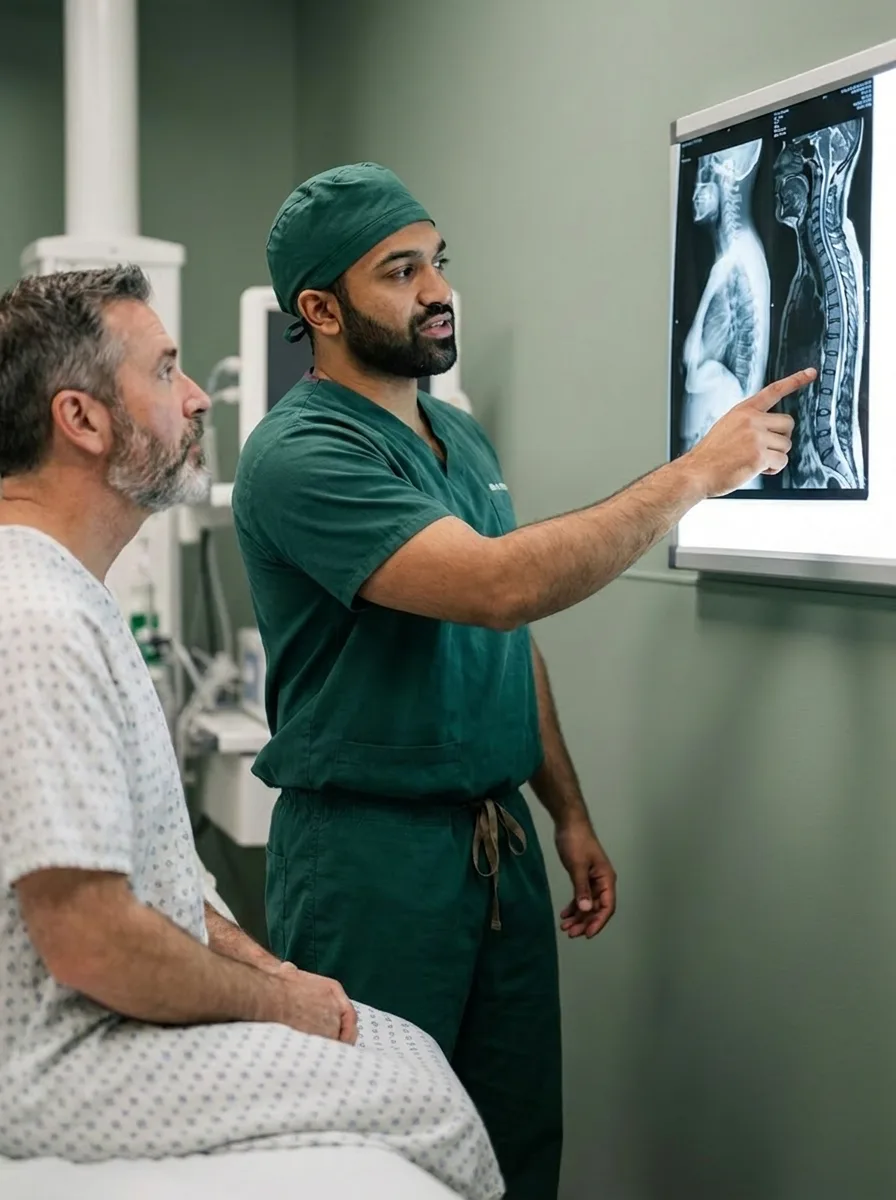
Disc herniations are often diagnosed by more than just imaging studies. Many patients have disc pathology on MRI imaging but are asymptomatic. Therefore, the physical exam is essential to determine if the herniation is actually causing the symptoms.
- History and physical exam to pinpoint which spinal level is involved.
- MRI clearly shows discs, nerve compression, and soft tissue—the best diagnostic tool.
- CT scans help when MRI isn’t an option or more detail is needed.
- X-rays check spinal alignment, arthritis, and instability contributing to symptoms.
- EMG nerve testing helps reveal which nerves are affected in cases where patients have multiple injured disks
How do we treat a Disc Herniation?

01
Conservative care
02
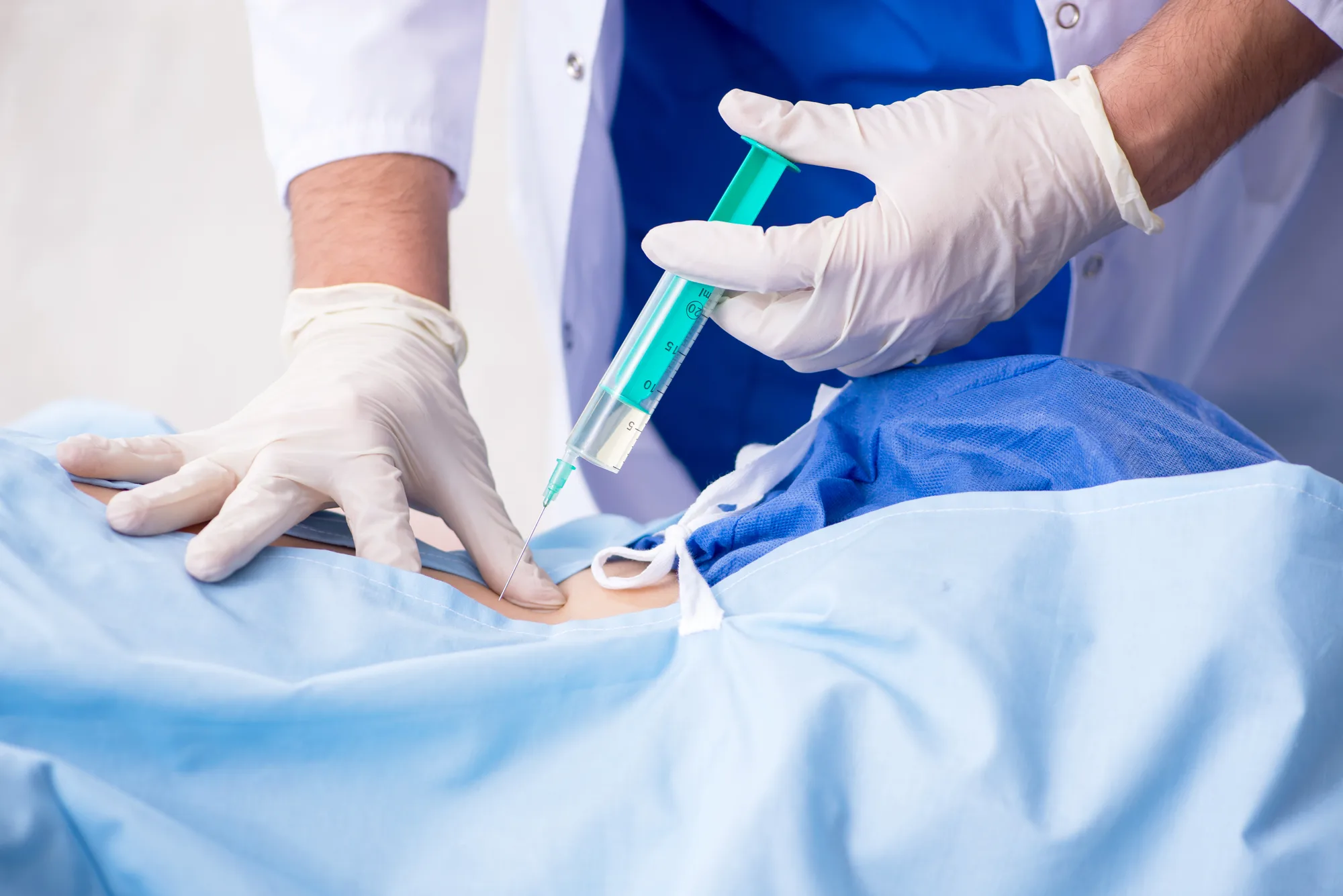
Epidural steroid injections
03
Minimally-invasive surgery
Common Procedures We Perform to treat Disc Herniations
Lumbar Microdiscectomy / Laminectomy
Considering a lumbar microdisectomy or laminectomy in New Jersey? Learn how the procedure works, who may be a candidate, and what to expect before and after surgery.
Anterior & Lateral Lumbar Fusion
Anterior lumbar interbody fusion (ALIF) and lateral lumbar interbody fusion (LLIF) are techniques that access the lumbar spine through the front or side of the body rather than through the back.
Anterior Cervical Discectomy and Fusion
Considering an anterior cervical discectomy and fusion in New Jersey? Learn how the procedure works, who may be a candidate, and what to expect before and after surgery.
Can we treat your Disc Herniation?
At the Jey Institute, we see patients from all across New Jersey who suffer from every possible presentation of disc herniation.
Patients come to us with both mild nerve irritation and late debilitating nerve compression that requires immediate attention. We focus on offering minimally invasive surgical techniques.
Our objective is always to first identify the least invasive procedure necessary to safely and effectively relieve your symptoms.
If you are suffering from:
- Neck back arm or leg pain non-responsive to conservative treatments
- Symptomatically and mechanically correlated nerve compression confirmed by MRI
- Weakness, numbness, or progressive neurologic symptoms
- Chronic sciatic symptoms that are impacting your quality of life
- Inability to return to work or regular activity

Dr. Shiveindra Jeyamohan
Lead Spinal Neurosurgeon
Why choose the Jey Institute for your Disc Herniation treatment?
At The Jey Institute, we practice contemporary spinal care, such as disc herniation treatment, with the goal of limiting your recovery time, decreasing tissue damage and getting you back to your life safely and quickly.
Our skilled team is trusted by patients all across New Jersey due to our expertise with minimally invasive spine surgery and tailored treatment solutions.
- 2,200+ Patients served
- 650+ Surgeries performed
Frequently asked questions about Disc Herniations
Are disc herniations dangerous?
Most disc herniations pose no serious threat and can be observed. Serious neurologic deficits due to compression of nerves which control bowel or bladder function, increasing weakness, or severe neurologic dysfunction are considered emergencies and should be evaluated and treated as such.
Can a disc herniation come back after surgery?
Yes, a disc herniation can recur, although the majority of patients actually do very well long term.
Adhering to post-op restrictions and following spine protection tips can decrease your chances of recurrence. Maintaining good posture, avoiding excessive strain, and following your rehabilitation plan can also help protect your spine over time.
How long should I try conservative care before considering surgery?
Most patients will undergo conservative treatment for a minimum of 6-8 weeks before undergoing surgery if they are not demonstrating weakness or progression of neurological deficit. This time frame varies with each individual based on severity of symptoms, imaging results, and functional limitations.
What is recovery like after a microdisectomy?
The majority of patients go home the same day following microdiscectomy surgery and are walking immediately afterwards. Patients who perform desk jobs often can return to work fairly soon after surgery and physical therapy typically starts within weeks. Recovery and return to unrestricted activity is usually gradual and occurs over the course of several months.
What is the difference between a herniated disc and a bulging disc?
A bulging disc happens when the outside of the disc weakens and protrudes outward. However, it does not tear completely. With a herniated disc, the disc tears allowing inner disc material to rupture out through the outer layer, pushing on surrounding nerves more forcefully.
Herniated discs are more likely to cause significant nerve pain, numbness, and weakness depending on the severity of the compression.
Will my disc heal on its own?
The disk will never return back to normal; however, many patients can find significant improvement in their painful symptoms with conservative treatment.
Locations throughout New Jersey
Dover, NJ
50 Nelson St.
Dover NJ 07801
Clifton, NJ
735 Clifton Avenue
Clifton NJ 07013
Hamilton, NJ
311 Whitehorse Ave.,
Hamilton Township, NJ
08610
West Orange, NJ
414 Eagle Rock Ave,
West Orange, NJ 07052
Suite 304
East Brunswick, NJ
180 Tices Lane
East Brunswick NJ 08816
Suite 106
Little Silver, NJ
200 White Road,
Little Silver, NJ 07739
Suite 111
Real reviews from our past patients
“Dr. J was attentive, listened to me and showed that he truly cared about my problems. He explained in details and offered me expert opinions. I love that he treats patients as individual and truly listens.”
Bernice
“After being unhappy with my spine surgeon, I found Dr. J. He explained exactly what was wrong with me, made a game plan, and had his team help out in scheduling. Once he found where the problem was, he got me scheduled, did excellent work, and I was home in a couple days. The scar is WAY SMALLER than my original surgery, which wasn’t even as big! He really is a minimally invasive expert and my recovery was way faster!”
Eddie
“I’ve had 5 different operations on my back in the last decade. Dr. J did number 6. His scar was the smallest, least amount of pain, and for the first time after any surgery I went home the same day. Maybe I’m just getting used to surgery lol!”
Steve W.
“No doubt in my mind Dr. Jeyamohan saved my life.”
Steven C.
“Thank You from the bottom of my heart for getting my active lifestyle back- I’m so happy with the outcome- thank u for being honest about the pain I would experience in the first month of recovery- your bedside manner in the hospital was excellent – your PA Andrea was amazing as well- I would recommend Evergreen Health to everyone and my team of docs was super- Thank U Dr J, Dr Nora, and Dr Ting!! Feels amazing to be standing tall with great posture everyday I’m getting stronger”
Michelle G.
“Kind and thorough. Top quality and felt safe throughout.”
Verified Patient
“Took the time to explain my pictures and what was wrong with me, and gave me many different options. Answered every single one of my questions and even a few over the phone. Went home the same day and on my way to a full recovery! Office is clean, bright, and everyone was super friendly and helpful! Andrea his assistant has been a treasure!”
Verified Patient
“Incredibly thorough, took his time to explain and answer all my questions. Gave me plenty of options. I probably visited with him three or four times before committing to surgery, never once did he rush me. Saw me every day in the hospital, walked with me. I’m so thankful I had the surgery with him. I saw two other spine surgeons who didn’t even want to take on such a complicated operation but Dr. J did incredible work and I’m back to walking on my own! I don’t even need a cane anymore”
Verified Patient
“First, the office was not good. Getting an appointment, scheduling, paperwork, was a nightmare. But once I got in to see Dr. J, it was smooth sailing! He got me the tests I needed, talked to me about treatment options, and helped me set up an injection. We talked about different surgeries, got me scheduled, did great work, and made sure I had follow-up appointments. I’m back to the farm ahead of schedule and back to work. If only I could have got in to see him sooner.”
Verified Patient
“I have to be honest here and own up. I saw three different spine surgeons and was worried “Dr. Jey” as everyone calls him was too young. I went with someone else who fused three levels in my back. I did horribly with lots of complications. After getting over all my issues, I swallowed my pride and went back to Dr. Jey. He never made me feel bad and graciously took a look at everything, ordered more tests, and showed me what was going on. Bad news, he says he couldn’t undo the fusion. Worse news, it’s now an even bigger operation to fix, and he was honest and said the best we can do is try to get me…”
Verified Patient
“My experience was excellent. Dr J is very knowledgeable explained everything in a simplified way that made me very comfortable. His staff went above and beyond answer any question I had No matter what the question was. I can’t thank Dr J and his staff enough For helping me get through this spine Injury.”
Jim D.
“I am a 45 year old male who led an active lifestyle when a back injury changed my life. I went from working and being active with my 4 children to suddenly I couldn’t make any movement without excruciating pain. The type of pain I can’t even explain in words. I went to see Dr. Jeyamohan on the referral of my sister who is a physician as well. When I walked into the office the team had already looked at my MRI and explained to me in honest terms that we had an emergency situation on our hands and that delaying surgery was simply not an option. Dr. Jeyamohan Made calls and got me scheduled for emergency back surgery right…”
Eric F.