
Sciatica Treatment in New Jersey
Sciatica describes pain along the sciatic nerve. The pain from sciatica usually branches from your lower back down through your buttock and leg. Most cases of sciatic resolve over time with conservative care, but if you’re still having symptoms it’s possible there’s still compression on your nerve.


Definition
What is a Sciatica?
Sciatica refers to pain that radiates along the path of the sciatic nerve due to compression or irritation of the nerve or nerve root. The sciatic nerve begins in your lower spine, runs through your buttocks, and branches down each leg. It’s your body’s largest nerve.
The term “sciatica” is not a diagnosis, but instead a group of symptoms related to problems with the lower back affecting the sciatic nerve.
When pressure is placed on one of the nerve roots forming the sciatic nerve, pain and neurological symptoms may radiate along the sciatic nerve.
Sciatica usually occurs on one side of your body. Symptoms may be mild and come and go or may be severe, making it difficult to walk, work and sleep.
What are the common causes of Sciatica?
Sudden Injury or Trauma
Sciatica caused by a herniated disc is the most common source. As the soft center of a spinal disc pushes through a crack in the tougher exterior casing, it can irritate nearby nerve roots. This will frequently cause a sharp, shooting pain that travels down into your buttock, thigh, calf, foot.
Sciatica Caused by Lumbar Stenosis
Lumbar stenosis occurs when the spinal canal narrows and compresses the space available for the nerves to travel. With worsening compression patients can have symptoms of sciatica and heaviness, numbness, weakness or difficulty walking.
Degenerative Conditions Affecting the Spine
Degenerative conditions such as arthritis, disc degeneration and spondylolisthesis can slowly affect your spinal anatomy and lead to compression of nerves over time. These are common causes of chronic or intermittent sciatica.
Common symptoms of Sciatica
Sciatica most often affects only one side of your body. Pain and symptoms usually mimic the distribution of the sciatic nerve. Some people have only infrequent discomfort. However, others develop significant symptoms that can impact work, workouts and daily life.
- Sharp, burning, or electric pain traveling down one leg
- Numbness or tingling in the leg, calf, or foot
- Muscle weakness in the affected leg
- Pain that worsens when sitting, bending, coughing, or sneezing
- Difficulty standing or walking for extended periods
- Rarely, loss of bowel or bladder control requiring immediate medical attention
Dr. J explained everything in a simplified way that made me very comfortable, and his staff went above and beyond.



When to reach out
When should you see a spine specialist for Sciatica?
Episodes of sciatica usually resolve over time with activity modification and conservative care. If symptoms persist however, further workup may be needed to investigate for possible ongoing nerve compression.
Consider making an appointment with a spine specialist if pain lasts longer than several weeks, interferes with work/recreation on a recurrent basis or does not respond to physical therapy and medications. Also seek evaluation if numbness/tingling or weakness begins to interfere with your ability to walk, exercise or go about your daily routine.
If you experience rapid weakness progression, bowel/bladder incontinence, or numbness in your groin or saddle region you should be seen emergently. These signs may be symptoms of severe nerve compression.
Risks of untreated Sciatica
Neglecting your sciatica can allow your nerves to remain irritated and compressed for weeks or months. Although some conditions can resolve over time, others can progressively worsen and lead to additional symptoms.
Chronic nerve compression can lead to ongoing pain. You may experience worsening numbness, weakness, and difficulty moving. Some patients avoid doing activities they love because their symptoms act up while working out, traveling, or doing daily activities.
The longer your nerves are compressed, the more likely you are to have permanent nerve damage. If there is significant compression on the nerves exiting your spine, you could experience rare issues with bladder/bowel dysfunction, and you should see your doctor immediately.
How do we diagnose Sciatica?
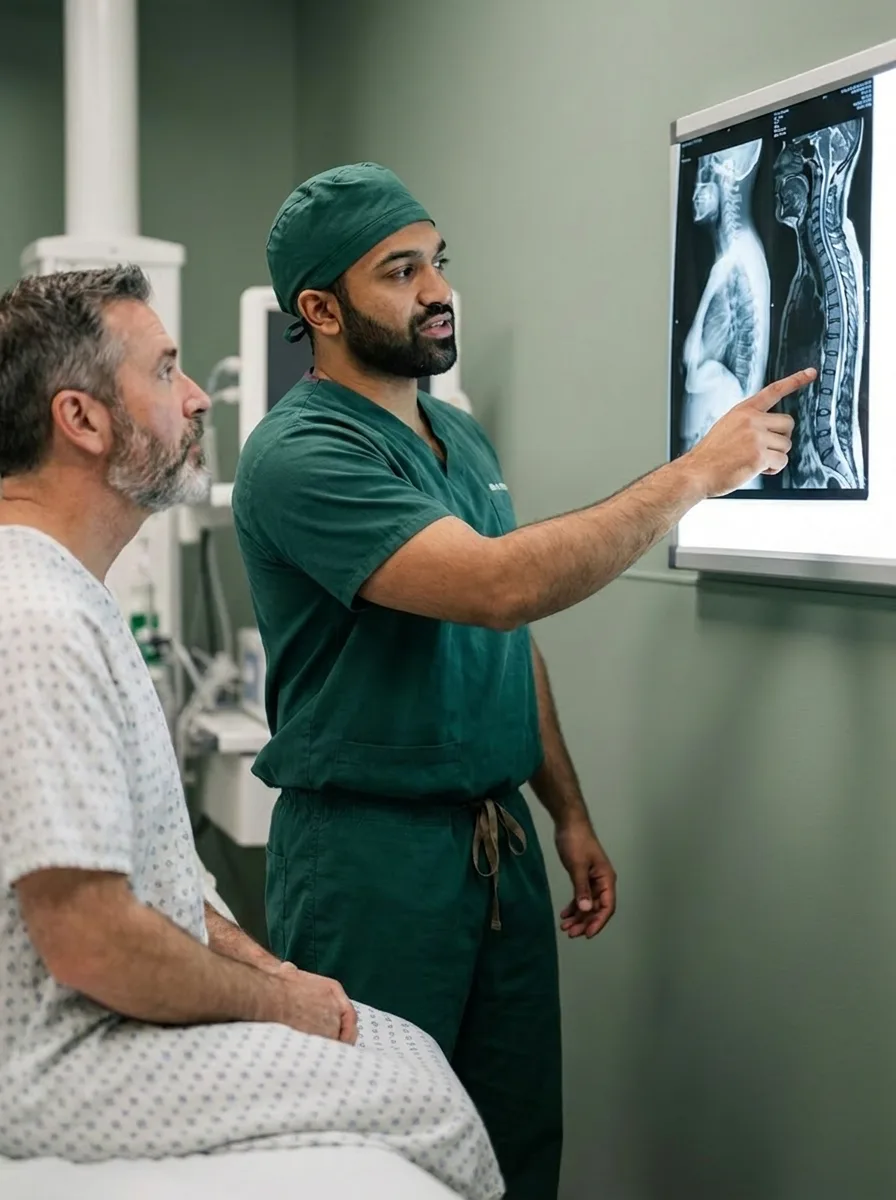
Diagnosis at the Jey Institute starts with a thorough review of your symptoms, medical history and your physical exam findings. Oftentimes there are multiple conditions along the spine that can cause these symptoms, so it is important we determine where your nerves are being pinched to create an accurate treatment plan.
We will test your strength, sensation, reflexes and range of motion looking for evidence of nerve irritation. Often specific maneuvers can help us determine if a nerve root is irritated, such as the straight leg raise test.
By correlating examination findings with imaging results, we can determine the exact cause of sciatica and recommend the most appropriate treatment options.
Diagnostic testing may include:
- Detailed medical history and symptom review
- Physical and neurological examination
- MRI imaging to evaluate discs, nerves, and soft tissues
- X-rays to assess alignment and spinal stability
- CT imaging when additional bony detail is needed
- Electromyography (EMG) to evaluate nerve function in select cases
How do we treat Sciatica?

01
Conservative care

02
Targeted interventions
03
Minimally-invasive surgery

When is surgery needed for Sciatica?
Surgery is generally considered when symptoms continue despite appropriate conservative treatment or when nerve compression causes progressive neurological deficits.
Many patients seek surgical treatment after weeks or months of persistent leg pain that limits their ability to work, exercise, travel, or enjoy everyday activities. Others may develop worsening weakness, significant numbness, or symptoms that repeatedly return despite temporary relief from medications, injections, or physical therapy.
The goal of surgery is to directly address the source of nerve compression and provide lasting relief of sciatic nerve symptoms while preserving normal spinal function whenever possible.
Common Procedures we perform to treat Sciatica
Lumbar Microdiscectomy / Laminectomy
Considering a lumbar microdisectomy or laminectomy in New Jersey? Learn how the procedure works, who may be a candidate, and what to expect before and after surgery.
Anterior & Lateral Lumbar Fusion
Anterior lumbar interbody fusion (ALIF) and lateral lumbar interbody fusion (LLIF) are techniques that access the lumbar spine through the front or side of the body rather than through the back.
Getting Back to life
Recovery after Sciatica surgery
Recovery will vary depending on what procedure is done and how long you were experiencing nerve compression before surgery. The majority of patients who have a minimally invasive procedure are able to go home the same day.
Walking is usually encouraged immediately following surgery. Many people experience relief from leg pain soon after surgery. You may experience some soreness around the incision area. Overall, recovery from a minimally invasive procedure is usually quicker than traditional open discectomy since there is a smaller incision and less trauma to the surrounding tissues.
Improvement in numbness and weakness may take several weeks, especially if the nerves have been compressed for a long period of time. Most people resume normal activity gradually over a few weeks and follow-up with their surgeon’s post-op instructions.

Who is a candidate for Sciatica treatment?
Patients we see have all kinds of sciatica symptoms. Some people have mild symptoms that come and go. Others have intense nerve compression that can debilitate their lives.
Here are some of the qualities that potential patients have:
- Experience leg pain, numbness, tingling, or weakness from irritated sciatic nerves
- Possess imaging that reveals nerve compression
- Haven’t found relief from physical therapy, medications, or injections
- Are adults who want a minimally invasive option
- Have sciatica symptoms that affect their ability to work, exercise, sleep, or live life to the fullest
Each treatment plan is individualized to your specific symptoms, imaging studies, medical history, and goals.
Can Sciatica cause permanent nerve damage?
Sciatica rarely causes permanent nerve damage. Simple treatment of the cause of sciatica often resolves the problem. Long term or significant compression can sometimes cause permanent symptoms.
Permanent numbness, weakness or changes in sensation may occur if a nerve is compressed for some time. The longer a patient goes without seeing a doctor while experiencing sciatica symptoms, the greater the chance of permanent nerve damage.
If sciatica is treated correctly and early enough there is a less chance of ongoing nerve damage and incomplete recovery.

Dr. Shiveindra Jeyamohan
Lead Spinal Neurosurgeon
Why choose the Jey Institute for your Sciatica treatment?
At the Jey Institute, we focus on spine conditions that can lead to sciatica and nerve compression. Our doctors have years of experience and use minimally invasive spine surgery to provide you the greatest amount of symptom relief in the shortest amount of time.
We know that sciatica treatment in New Jersey can vary from person to person. For some, it may cause occasional episodes of leg pain. For others, it may interfere with work, exercise, sleep and normal daily function.
Our goal is to tailor treatment to the cause of your nerve compression, the severity of your symptoms and what you want to get out of life.
- 2,200+ Patients served
- 650+ Surgeries performed
Frequently asked questions about Sciatica
Can Sciatica affect both legs?
Sciatica typically occurs in just one leg. However, there are times when a spinal condition may compress nerves on both sides of the spine. Bilateral leg symptoms should be evaluated to determine the cause and best course of treatment.
Can Sciatica be prevented?
Although some cases can’t be avoided, keeping a healthy weight, exercising regularly, not using tobacco products and learning proper lifting techniques may decrease your risk. Remaining active and strengthening your core muscles and spine can also help keep you from experiencing another episode.
Can Sciatica cause permanent nerve damage?
Permanent nerve damage is rare. However, if left untreated or treated late after severe or prolonged compression occurs, it can lead to persistent numbness, weakness, or altered sensation.
Can Sciatica come back after treatment?
Yes. Sciatica may recur if the problem causing it in your spine is still present. Conditions such as degenerative disc disease, arthritis and age-related changes can continue to affect your spine. Exercise, physical therapy and healthy living may help prevent recurrences.
How long does recovery take after surgery for Sciatica?
Recovery varies based on the procedure done and the amount of nerve compression prior to surgery. Most patients go home the same day of minimally invasive surgery and are walking right after surgery. Leg pain usually improves rapidly, however numbness and weakness can take weeks to months to recover.
Is walking good for Sciatica?
Most patients can walk lightly for exercise to help keep joints mobile and to decrease stiffness. Walking should be limited or stopped if it causes your symptoms to become much worse. Your spine specialist or physical therapist can suggest an exercise program tailored to your specific needs.
What’s the difference between Sciatica and general lower back pain?
Sciatica describes pain, numbness, tingling or weakness that is felt in the leg. The pain is caused by irritation of a spinal nerve. Lower back pain usually originates from muscles, joints, discs, arthritis or spinal instability. Lower back pain does not always travel into the leg.
Will Sciatica go away on its own?
Often, yes. The majority of patients will improve with rest, activity modification, physical therapy, and anti-inflammatory medication. Problems caused by pregnancy typically improve soon after giving birth. If your symptoms have persisted, there may be continued nerve compression that needs to be addressed.
Locations throughout New Jersey
Dover, NJ
50 Nelson St.
Dover NJ 07801
Clifton, NJ
735 Clifton Avenue
Clifton NJ 07013
Hamilton, NJ
311 Whitehorse Ave.,
Hamilton Township, NJ
08610
Little Silver, NJ
200 White Road,
Little Silver, NJ 07739
Suite 111
West Orange, NJ
414 Eagle Rock Ave,
West Orange, NJ 07052
Suite 304
East Brunswick, NJ
180 Tices Lane
East Brunswick NJ 08816
Suite 106
Real reviews from our past patients
“Dr. J was attentive, listened to me and showed that he truly cared about my problems. He explained in details and offered me expert opinions. I love that he treats patients as individual and truly listens.”
Bernice
“After being unhappy with my spine surgeon, I found Dr. J. He explained exactly what was wrong with me, made a game plan, and had his team help out in scheduling. Once he found where the problem was, he got me scheduled, did excellent work, and I was home in a couple days. The scar is WAY SMALLER than my original surgery, which wasn’t even as big! He really is a minimally invasive expert and my recovery was way faster!”
Eddie
“I’ve had 5 different operations on my back in the last decade. Dr. J did number 6. His scar was the smallest, least amount of pain, and for the first time after any surgery I went home the same day. Maybe I’m just getting used to surgery lol!”
Steve W.
“No doubt in my mind Dr. Jeyamohan saved my life.”
Steven C.
“Thank You from the bottom of my heart for getting my active lifestyle back- I’m so happy with the outcome- thank u for being honest about the pain I would experience in the first month of recovery- your bedside manner in the hospital was excellent – your PA Andrea was amazing as well- I would recommend Evergreen Health to everyone and my team of docs was super- Thank U Dr J, Dr Nora, and Dr Ting!! Feels amazing to be standing tall with great posture everyday I’m getting stronger”
Michelle G.
“Kind and thorough. Top quality and felt safe throughout.”
Verified Patient
“Took the time to explain my pictures and what was wrong with me, and gave me many different options. Answered every single one of my questions and even a few over the phone. Went home the same day and on my way to a full recovery! Office is clean, bright, and everyone was super friendly and helpful! Andrea his assistant has been a treasure!”
Verified Patient
“Incredibly thorough, took his time to explain and answer all my questions. Gave me plenty of options. I probably visited with him three or four times before committing to surgery, never once did he rush me. Saw me every day in the hospital, walked with me. I’m so thankful I had the surgery with him. I saw two other spine surgeons who didn’t even want to take on such a complicated operation but Dr. J did incredible work and I’m back to walking on my own! I don’t even need a cane anymore”
Verified Patient
“First, the office was not good. Getting an appointment, scheduling, paperwork, was a nightmare. But once I got in to see Dr. J, it was smooth sailing! He got me the tests I needed, talked to me about treatment options, and helped me set up an injection. We talked about different surgeries, got me scheduled, did great work, and made sure I had follow-up appointments. I’m back to the farm ahead of schedule and back to work. If only I could have got in to see him sooner.”
Verified Patient
“I have to be honest here and own up. I saw three different spine surgeons and was worried “Dr. Jey” as everyone calls him was too young. I went with someone else who fused three levels in my back. I did horribly with lots of complications. After getting over all my issues, I swallowed my pride and went back to Dr. Jey. He never made me feel bad and graciously took a look at everything, ordered more tests, and showed me what was going on. Bad news, he says he couldn’t undo the fusion. Worse news, it’s now an even bigger operation to fix, and he was honest and said the best we can do is try to get me…”
Verified Patient
“My experience was excellent. Dr J is very knowledgeable explained everything in a simplified way that made me very comfortable. His staff went above and beyond answer any question I had No matter what the question was. I can’t thank Dr J and his staff enough For helping me get through this spine Injury.”
Jim D.
“I am a 45 year old male who led an active lifestyle when a back injury changed my life. I went from working and being active with my 4 children to suddenly I couldn’t make any movement without excruciating pain. The type of pain I can’t even explain in words. I went to see Dr. Jeyamohan on the referral of my sister who is a physician as well. When I walked into the office the team had already looked at my MRI and explained to me in honest terms that we had an emergency situation on our hands and that delaying surgery was simply not an option. Dr. Jeyamohan Made calls and got me scheduled for emergency back surgery right…”
Eric F.